Build the Hub, Then Add Barrels: The Gulf’s Expanding Tieback Model
September 21, 2026
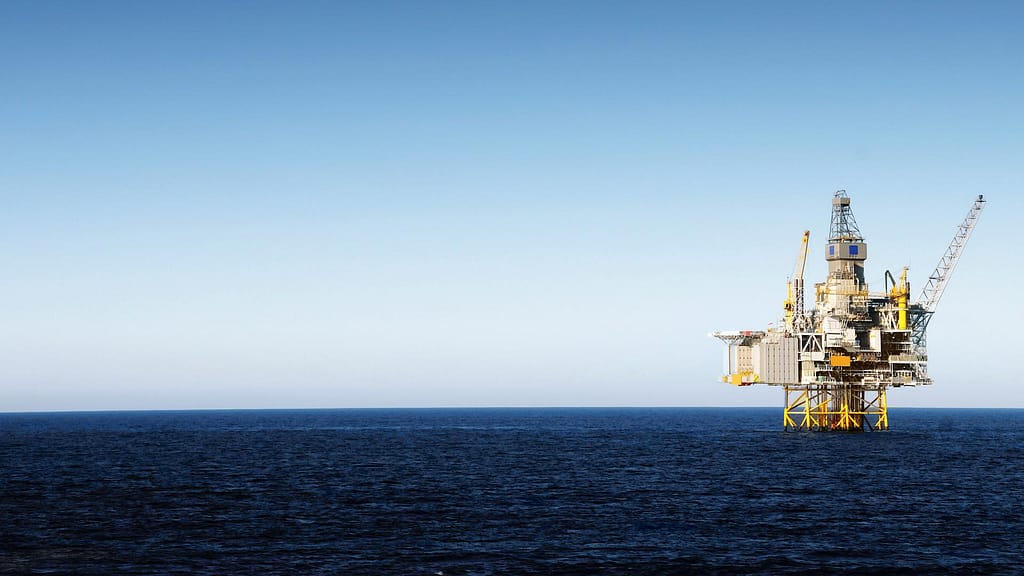
A production facility’s value is no longer defined only by the field for which it was built. Across the Gulf of America, operators are turning offshore hosts into long-term portfolio assets that can accept new wells, new fields and new phases of production.
An offshore production facility represents a major commitment of capital, engineering and operational capability.
The first development must justify that investment. The greater strategic opportunity, however, often lies in what the facility can support next.
Across the Gulf of America, operators are increasingly building portfolios around hubs. An anchor field supports the initial project, while nearby discoveries and reservoir extensions are developed later through subsea tiebacks.
The result is a repeatable development model: build or establish the host, create available processing capacity, and then add barrels as opportunities mature.
A host can become a portfolio asset
The hub model changes how infrastructure value is measured.
A platform or floating production system is not judged only by the production delivered during its first phase. Its value also includes the wells, fields and discoveries that can be connected during the following ten, twenty or even thirty years.
This helps explain why operators are investing in both new Gulf production hubs and brownfield expansions.
Tiebacks can maintain host throughput as the original reservoirs decline. They can spread operating costs across additional production. They can also give the operator a faster and more capital-efficient route to commercialise discoveries that would struggle to support a standalone facility.
bp’s Gulf portfolio demonstrates this approach. Argos, Atlantis and the future Tiber platform are not isolated developments. Each is being treated as infrastructure through which additional resources can be brought into production. (BP)
Who Dat East: extending the value of an established system
Who Dat East is a current example of the model in action.
The development was sanctioned in August 2026 by the LLOG-operated joint venture. It will complete the existing discovery well and connect it to the Who Dat floating production system through a 29 km pipeline.
The scope includes subsea controls and minor upgrades to the host facility. First production is planned for the second half of 2028, with an initial gross production rate of approximately 6,500 barrels per day of liquids and 50 million standard cubic feet per day of gas. (karoonenergy.com.au)
The economics are enabled by what is already available.
Who Dat East does not need its own production host, export route or complete processing system. Production will be commingled and processed through the existing Who Dat infrastructure.
For the operator and partners, the challenge is to deliver the new field efficiently while ensuring that the common system remains capable of supporting both existing and incremental production.
That means host readiness is as important as well readiness.

String Music: another field joins the Delta House network
The String Music development follows a similar pattern.
Murphy Oil has awarded Subsea7 an engineering, procurement, construction and installation contract for the project. String Music will be connected to the Delta House floating production system in Mississippi Canyon Block 431.
The development includes a production flowline and associated subsea infrastructure in water depths of approximately 1,850 metres. Engineering is being led from Houston, with offshore installation scheduled for 2027. (World Oil)
Delta House was designed as a hub serving multiple deepwater fields. String Music adds another production source to that network.
Subsea7 has also described its work with Murphy as part of a more standardised and efficient delivery model intended to improve predictability across future projects. That is commercially important because a repeatable approach can reduce engineering effort, streamline procurement and give operators greater confidence in schedule.
It also reinforces the importance of repeatable integrity practices.
If project delivery is becoming standardised, the way operators establish baseline condition, collect electrical data and prepare systems for long-term monitoring should become more consistent too.

Argos and Atlantis show the model at scale
bp brought its Argos Southwest Extension into production in August 2025, seven months ahead of schedule. The development connected three new wells through a drill centre approximately five miles from the Argos platform and added around 20,000 boe/d of gross peak annualised average production. (BP)
At Atlantis, the Drill Center 1 Expansion connected two additional wells and began production in December 2025, two months ahead of schedule. It added approximately 15,000 boe/d of gross peak production.
Atlantis has now been producing for nearly twenty years. Rather than treating its age as a reason to wind down investment, bp is using new wells, water injection and facility modifications to prepare the asset for further production. A separate major facility expansion began operating in July 2026, adding two subsea water-injection wells and approximately 10,000 boe/d of gross peak annualised average production. (BP)
By combining subsurface knowledge, disciplined project delivery and careful stewardship of existing infrastructure, the Atlantis team is extracting more value from an asset that has already supported Gulf production for almost two decades.
The technology supports that objective. It does not replace the operator’s judgement.
New hubs create the next tieback opportunities
The same logic is being applied to new infrastructure.
The Tiber-Guadalupe development includes a new floating platform with capacity for 80,000 barrels of oil per day. Its first phase combines six Tiber wells with a two-well Guadalupe tieback, with production expected to begin in 2030.
The Tiber platform will reuse more than 85% of the design developed for bp’s Kaskida project. That standardised approach is intended to improve cost and execution efficiency, while the hub itself creates the potential for later phases and additional wells. (BP)
This is the Gulf model in its clearest form:
A new host is designed to produce the anchor resource.
A nearby field is incorporated through a tieback.
Further discoveries or reservoir extensions can then be assessed against an installed and operating hub.
The first phase creates production. The architecture creates optionality.

Host readiness is more than spare capacity
When evaluating a new connection, processing capacity is only one part of the decision.
The host and subsea network must also be assessed for:
- Remaining design and operating life
- Electrical and control-system condition
- Umbilical and jumper integrity
- Available power and communications capacity
- Equipment obsolescence
- Monitoring coverage and diagnostic capability
- Common-mode failure consequences
- Maintainability once the new development is online
A facility may have sufficient separator or compression capacity but still carry hidden constraints within its control architecture.
An ageing electrical circuit, declining insulation resistance or poorly understood downstream network can create uncertainty that is not visible within a conventional capacity study.
The most effective time to identify those risks is before the new production becomes dependent on the system.

Establishing a condition baseline
A robust tieback strategy should therefore begin with a clear understanding of existing condition.
That does not mean replacing every older component or eliminating every source of risk. It means giving the operator reliable information with which to make proportionate decisions.
Continuous insulation-resistance monitoring can reveal deterioration over time. Localised monitoring can help separate different sections of the electrical network. Connected analytics can bring multiple measurements together so that engineers can see how condition is changing across the field.
The objective is confidence.
Operators should be able to demonstrate that the host is ready, understand where vulnerabilities exist and put an appropriate response plan in place before the new tieback is commissioned.
Making every connection more valuable
The Gulf’s expanding tieback model is not simply about adding wells.
It is about converting individual offshore facilities into adaptable production hubs that can support changing portfolios over many years.
Who Dat East, String Music, Argos and Atlantis each show how new production can be built around infrastructure already in service. Tiber-Guadalupe shows how future facilities are being designed around the same principle from the outset.
For operators, the opportunity is significant. Every successful tieback can improve host utilisation, extend asset life and accelerate returns.
The task is to ensure that the infrastructure carrying that value is understood and protected. When host readiness includes condition visibility as well as processing capacity, operators can add barrels with greater confidence and keep control of the risk as their networks grow.
Planning a new tieback or assessing host readiness? Speak with our team about establishing the condition visibility needed to support confident, long-term field expansion.