UK North Sea Infrastructure Reuse: What Pegasus West Says About the Wider Tieback Model
October 19, 2026
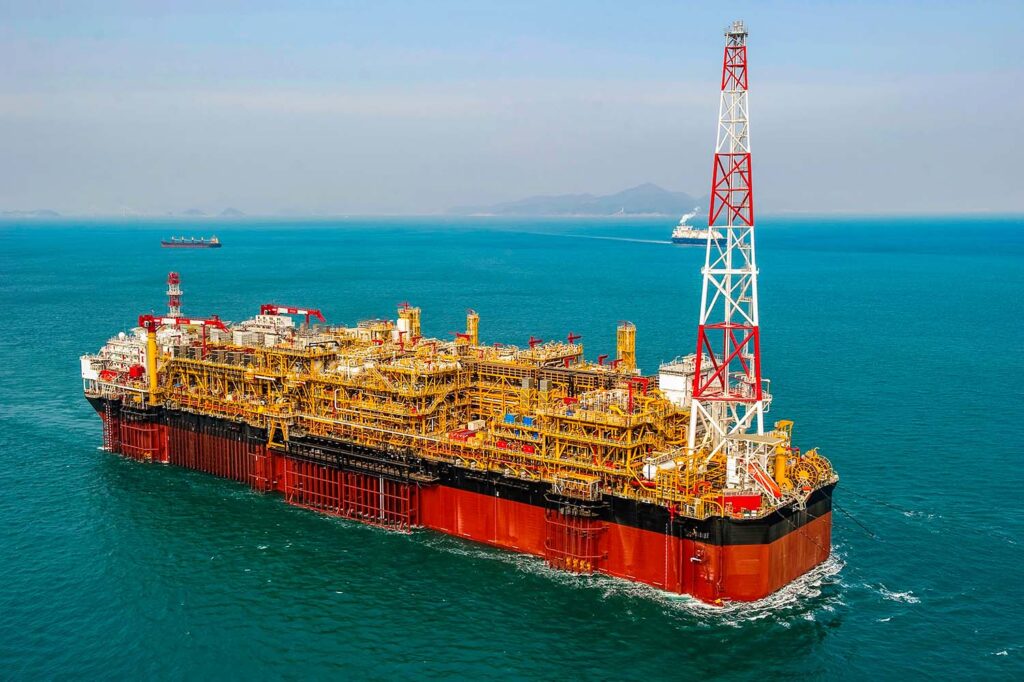
If you are looking at infrastructure reuse in a mature basin, Pegasus West is a useful example. It shows how established pipelines, processing facilities and operating knowledge can help unlock new resources. It also shows why you need evidence about the condition of the receiving asset — not assumptions.
In a mature offshore basin, your new discovery doesn’t exist in isolation.
Its commercial potential is shaped by the infrastructure around it: platforms, pipelines, terminals, processing facilities and the capacity available within them.
For operators in the UK Southern North Sea, that can create a valuable advantage.
You may not need to fund every element of a new production chain. If a reliable route to market already exists, you can reduce capital intensity and avoid unnecessary duplication of offshore infrastructure.
Pegasus West is a good example of what that looks like in practice.
A development built around an existing route to market
Pegasus West is a gas discovery in UK Continental Shelf Block 43/13b, in approximately 28 metres of water.
It was discovered in 2014 and tested at commercial rates. The North Sea Transition Authority’s Energy Pathfinder lists the project in the Select Phase, with a reference first-production date in the fourth quarter of 2030.
The development reference case routes production through a 65 km pipeline to the existing Breagh field infrastructure, and from there to the Teesside Gas Processing Plant. (Energy Pathfinder)
That route is central to the opportunity.
For the operator, that changes the shape of the development case. Breagh and Teesside provide access to infrastructure, processing capability and an established gas market, so new investment can focus on the field-development scope and the modifications needed to integrate it with the existing system.
An important distinction in the current concept
Pegasus West is often discussed within the wider tieback trend, but the current public reference concept should be described accurately.
INEOS’ March 2026 supply-chain presentation shows an indicative four-slot Pegasus West platform connected to Breagh through a 12-inch, approximately 64 km gas export pipeline. The scope also includes produced-water treatment, intervention capability, a high-integrity pressure protection system and brownfield modifications at Breagh and the Teesside Gas Processing Plant. (OEUK Share Fair)
It’s therefore not currently presented as a conventional single-well subsea tieback.
It’s an infrastructure-led development that uses a new field facility and pipeline connection to an established host and processing route.
That distinction doesn’t weaken the relevance of the project. It broadens it.
Infrastructure reuse is not limited to subsea wells connected directly to a platform. It includes any development model in which new production is enabled by assets that are already installed and operating.

The operator’s challenge is concept selection
Pegasus West remains in the Select Phase.
If you are the operator, this is where the hard work begins. You need a concept that balances capital cost, operating cost, emissions, reliability, maintainability and future expansion potential.
INEOS identifies five gas discoveries and multiple prospects across the wider Pegasus area. It estimates approximately 200 bcf of discovered gas, with more than 100 bcf of further potential. The development objective also considers later expansion across the Greater Pegasus Area and the wider hub, including possible carbon-storage opportunities. (OEUK Share Fair)
That means the preferred concept has to do more than bring first gas from Pegasus West into production.
It may need to support a longer-term regional strategy.
You are not just choosing a development route. You are making an architectural decision that could shape how several future resources are developed.

Reuse is a value strategy, not a shortcut
Reuse can create real value, but it isn’t a shortcut.
Before you build a new development case around existing infrastructure, the receiving system needs to be assessed for:
• Available production and processing capacity
• Pressure and flow compatibility
• Required brownfield modifications
• Remaining asset life
• Equipment obsolescence
• Control and communication interfaces
• Electrical-system condition
• Future expansion requirements
• Onshore processing constraints
• Responsibility across different assets and facilities
A pipeline or platform may have operated reliably for years. But when you add a new field, you change its duty, expected operating period and consequence of failure.
So, the question isn’t simply whether the infrastructure works today.
It’s whether it can support your future production profile with an acceptable level of risk.
Brownfield integration creates shared dependency
The current INEOS concept includes modifications at both Breagh and the Teesside processing facility.
Once Pegasus West is connected, production will depend on the availability of those existing assets. Any common interruption within the route can affect more than one field.
This is the same strategic trade-off seen in subsea hub developments.
Infrastructure reuse can reduce the need for new facilities, but it also concentrates production dependency on the assets you choose to reuse.
That’s why condition assessment has to be more than a late-stage check.
Before sanction, your project team needs a clear picture of the receiving asset’s mechanical, structural, process and electrical condition. Where gaps exist, you can then decide whether to upgrade, monitor or manage the risk through operating procedures and contingency planning.
Electrical condition deserves early attention
Electrical and control systems can be easy to overlook when the development conversation is focused on wells, platforms and export pipelines.
But brownfield modifications often introduce new equipment, new interfaces and a longer operating requirement.
Ageing cables and control circuits may already show gradual insulation deterioration. Existing monitoring devices may provide limited accuracy at the low insulation-resistance levels encountered later in field life, and some parts of the network may not be visible from the installed monitoring point.
This is where early electrical visibility matters. Continuous monitoring can help you understand the condition of topside and distributed electrical systems before a new development adds further dependency.
Tools such as V-LIM and V-SLIM support that work by extending visibility across legacy, distributed or transformer-isolated sections of the network where localised measurement may be needed.
You won’t remove every risk. But you’ll be making decisions with better evidence.

Planning for a longer infrastructure life
INEOS is targeting an operational emissions intensity below 5 kg CO₂ per barrel of oil equivalent for Pegasus West, compared with a stated basin average of approximately 25 kg CO₂/boe. Its case is partly built on using Breagh’s existing infrastructure and electrified onshore compression. (OEUK Share Fair)
Those environmental and commercial benefits depend on the continued availability of the existing route.
If Pegasus West and later Greater Pegasus resources proceed, the infrastructure may need to support production for longer than originally expected.
Your monitoring strategy needs to reflect that future, not only the asset’s original design basis.
A model for mature-basin development
Pegasus West shows why infrastructure-led development remains important in the UK.
For operators, smaller or more remote discoveries can become more attractive when a route to market already exists. You can maximise assets that have already been built, retain production through established facilities and create potential hubs for future resources.
But you still have to turn that opportunity into a viable project.
That’s where specialist integrity insight can support you. The role isn’t to take over the story, but to give your project team clear evidence about the condition of critical systems so you’re not building a new business case on an untested assumption.
Infrastructure reuse delivers the greatest value when the receiving asset is not only available but understood.
That principle applies to Pegasus West, to conventional subsea tiebacks and to the wider future of mature offshore basins.
If you are assessing infrastructure reuse, brownfield integration or extended asset life, our team can help you build a clearer picture of electrical-system condition before critical decisions are made.