Norway’s Hub-and-Spoke Future: From Satellite Discoveries to Multi-Field Tiebacks
November 2, 2026
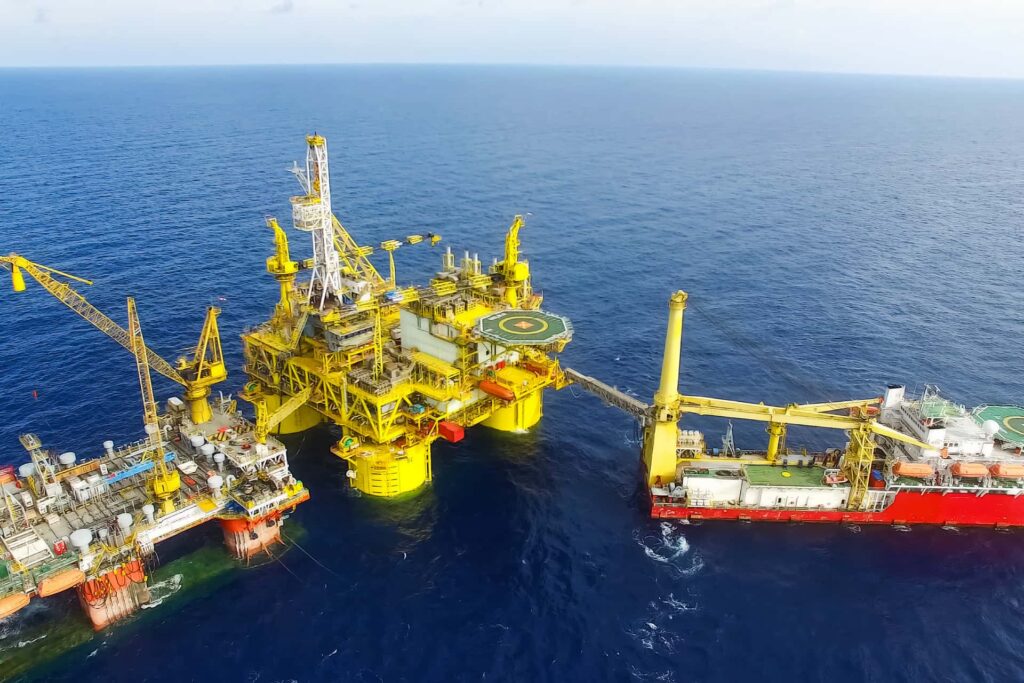
Norway is moving beyond individual satellite fields towards larger, integrated subsea developments organised around established hosts. Ringvei Vest and the continuing expansion of Johan Castberg demonstrate how operators can unlock greater resource value, extend infrastructure life and create new exploration opportunities through hub-and-spoke development strategies.
The Norwegian Continental Shelf is maturing. Large standalone discoveries are becoming less common, while many remaining opportunities are smaller, spread across licences or located close to infrastructure already in operation.
For you as an operator, this creates a clear challenge.
How do you maintain production, maximise resource recovery and justify investment returns while managing an increasingly complex portfolio of assets and stakeholders?
For many developments, the answer is no longer another standalone platform.
Instead, it is to organise discoveries around existing hubs.
Ringvei Vest: several discoveries, one architecture
In June 2026, Equinor and its partners agreed a development concept for Ringvei Vest that combines seven discoveries and one prospect across eight licences and seven owners, all connected to the Troll B platform. The proposed development includes six subsea templates and thirteen wells, with production processed through existing infrastructure.
The resource base is estimated at approximately 240 million barrels of oil equivalent. Under the current concept, wellstreams would be separated on the seabed before being transported to Troll B, which would also provide power and control to the subsea facilities. (Equinor)
While the project remains in the early stages, the architecture itself is significant.
This is not a traditional tieback involving a single discovery and a nearby host. It is a coordinated multi-field development spanning multiple licences, ownership structures and commercial interests.

Your Role Is Increasingly That of an Area Architect
Equinor has described its role in Ringvei Vest as that of an “area architect”.
It’s a description that reflects a challenge facing operators across the North Sea.
When you build a hub-and-spoke development, your responsibility extends far beyond the technical design of the subsea system. You also need to determine which discoveries belong within the development, how they should be phased, which facilities can process production, and how costs and benefits should be shared across participating parties.
The technical architecture must work.
The commercial architecture must work too.
Allocation methodologies, operational responsibilities, metering strategies and infrastructure access arrangements all become more complex when multiple fields and stakeholders share a common system. As industry experience shows, these decisions are most effective when addressed early in the development process.

Johan Castberg becomes a regional hub
The same hub principle is shaping exploration in the Barents Sea.
Johan Castberg began production in March 2025 and reached a production plateau of approximately 220,000 barrels per day later that year. Equinor now plans to use the installed facilities to support further discoveries and maintain plateau production for longer. (Equinor)
In July 2026, Equinor and its partners announced the Skrugard North Tubåen discovery located around 6 km north of the original Johan Castberg discovery. Preliminary estimates suggest recoverable resources of between 7.6 and 10.5 million barrels of oil equivalent, with a tieback to Johan Castberg under consideration. (Sokkeldirektoratet)
On its own, a discovery of this size may struggle to justify dedicated production infrastructure.
Connected to an established host, however, the economics change considerably.
One hub creates a wider exploration opportunity
The greatest value of a hub often extends beyond the resources already discovered.
Equinor has stated its ambition to add between 200 million and 500 million barrels to the original Johan Castberg resource base through continued exploration in the surrounding area. The company plans to drill one or two exploration wells annually, while developments such as Isflak and other discoveries continue to progress. (Equinor)
For operators, this illustrates an important shift.
Once the production vessel, export route and subsea infrastructure are in place, smaller discoveries can be assessed against a much lower incremental infrastructure requirement.
The host facility stops being simply a destination for production.
It becomes a catalyst for future growth.

More connected fields create common consequences
The benefits of shared infrastructure are significant.
So are the dependencies.
At Ringvei Vest, multiple templates and wells would depend on Troll B for power, control and processing. At Johan Castberg, an expanding portfolio of discoveries will increasingly depend on common subsea facilities and the FPSO.
As your network expands, a fault within shared infrastructure may affect multiple wells, fields or licence partners simultaneously.
That does not undermine the hub model.
It simply places greater importance on integrity management.
As your development grows, you need visibility into:
• Which components are shared across the system
• How asset condition differs between original and later development phases
• Where electrical and communications dependencies are concentrated
• Whether faults can be isolated without affecting the wider network
• How additional tiebacks alter the risk profile of the existing infrastructure
• Who owns the data and who is responsible for acting on it
These are not just operational questions.
They are architectural decisions that influence long-term availability, reliability and value creation.
Power and control become strategic infrastructure
Ringvei Vest is particularly relevant because power and control would be provided from Troll B. This creates a direct link between host availability and subsea production performance.
As more fields connect to shared infrastructure, traditional field-wide measurements may no longer provide the level of visibility you need to understand what is happening within individual parts of the electrical network.
To manage increasingly interconnected systems, you need condition intelligence that helps pinpoint issues before they develop into wider operational problems.
This is where distributed monitoring can play an important role.
V-SLIM is designed to provide localised insulation-resistance data within subsea distribution systems, including areas downstream of isolation transformers. Used alongside topside monitoring and connected analytics, it helps you identify where degradation is developing, prioritise intervention and make maintenance decisions based on evidence rather than assumptions.
The objective is simple:
Give you clearer visibility into the health of the infrastructure your development depends on.

Integrity across ownership boundaries
Multi-owner developments also create questions about assurance responsibility.
One party may own the host. Another may hold a larger interest in a satellite field. Equipment can sit within different licence areas while remaining operationally connected.
To manage these relationships effectively, you need clarity around:
• Which integrity data will be shared
• How asset condition will be reported
• Which party has authority to initiate intervention
• How maintenance costs will be allocated
• What performance and availability standards apply
• How future tiebacks will affect existing users
Clear, consistent condition data helps support confident decision-making across partner groups and enables discussions to be based on evidence rather than assumptions.

The future is organised around hubs
Norway’s hub-and-spoke future is not simply a response to smaller discoveries.
It is a strategy for maximising recovery from one of the world’s most valuable offshore infrastructure networks.
Ringvei Vest shows how several discoveries can be combined into one development. Johan Castberg shows how a new production hub can stimulate further exploration and turn smaller discoveries into material resources over time.
As an operator, you remain the architect of that success.
You are responsible for balancing production, reliability, commercial interests and long-term asset performance across increasingly interconnected systems.
Technology’s role is not to replace those decisions.
Its role is to help you make them with greater confidence.
As more fields depend on shared hosts, power systems and control networks, installed condition intelligence can help you understand emerging risks, protect availability and maintain trust in the infrastructure that underpins future growth.
If you’re planning, operating or expanding a multi-field tieback, contact the Viper team to explore how installed condition intelligence can help you protect availability across increasingly connected subsea assets.