Subsea Production Control Systems Explained
December 9, 2021
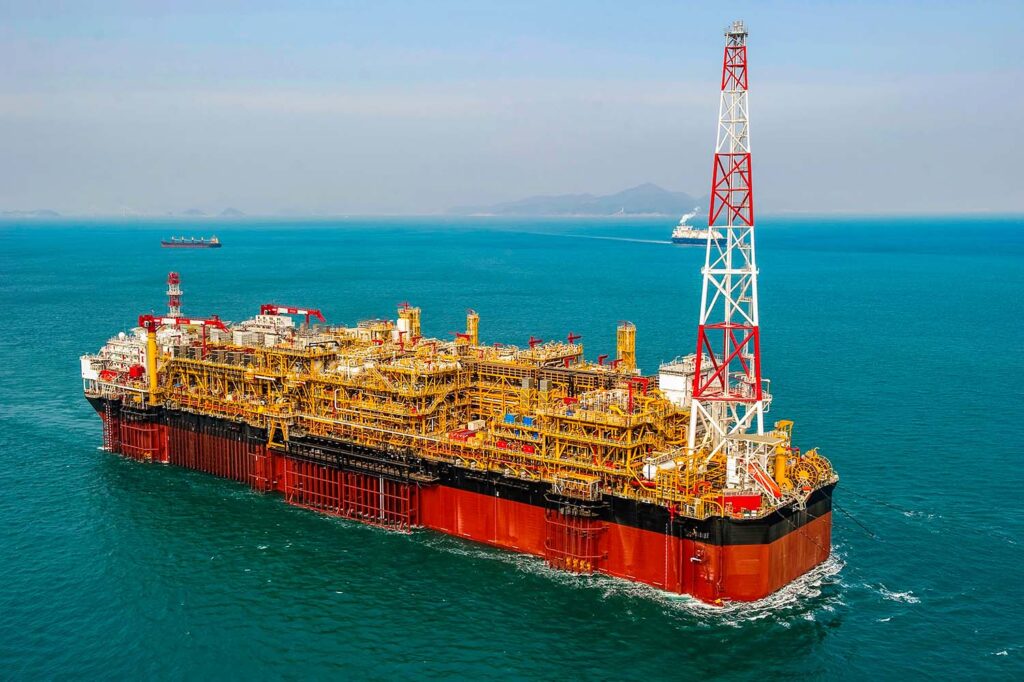
If you’ve ever looked at a subsea equipment list, you’ve probably come across a long list of acronyms – SCM, SEM, HPU, HIPPS, SSIV – alongside terms like Christmas trees, umbilicals and manifolds.
For engineers new to the offshore industry, it can feel overwhelming. Even for experienced professionals, it’s useful to step back and understand how these components fit together rather than viewing them as individual pieces of equipment.
In reality, every component has one purpose: to allow operators to safely monitor and control wells on the seabed, often hundreds or even thousands of metres below the surface.
In this article, we’ll look at the key parts of a Subsea Production Control System (SPCS), explain how they work together and explore the equipment that keeps offshore production running safely and reliably.

It starts with the Christmas tree
Despite the name, a subsea Christmas tree has very little in common with the festive decoration.
The term dates back to early land-based oil wells, where stacked valves and gauges resembled a decorated Christmas tree. The name has remained, even though today’s subsea Christmas trees are highly engineered assemblies designed to control the flow of hydrocarbons from the well.
A modern Christmas tree contains production and injection valves, flow control valves, chemical injection points and a range of sensors that continually monitor the condition of the well.
But a Christmas tree doesn’t operate on its own.
Every valve movement, every pressure reading and every temperature measurement needs to be monitored and controlled from the surface. That’s where the Subsea Production Control System comes in.

So, what is a Subsea Production Control System?
Think of the SPCS as the communication link between offshore operators and subsea equipment.
From a control room on a platform or FPSO, operators can open and close valves, monitor production conditions and receive continuous feedback from equipment installed on the seabed.
Without that control system, operators would have very little visibility of what’s happening below the surface.
A typical system is built around four main elements:
- The well
- The Christmas tree
- The control system
- The transportation system that carries produced fluids back to the host facility
Each plays a different role, but they’re designed to work as one integrated system.
The Subsea Control Module: the brain of the system
One of the most important pieces of equipment is the Subsea Control Module (SCM).
Mounted directly on the Christmas tree or manifold, the SCM receives commands from the surface and translates them into actions. Whether it’s opening a production valve, closing an injection valve or returning diagnostic information, almost everything passes through this unit.
Inside the SCM is the Subsea Electronics Module (SEM) – effectively the system’s computer. It processes communications, monitors equipment status and ensures instructions are carried out correctly before sending data back to the Master Control Station.
Without the SCM and SEM working together, remote subsea operations simply wouldn’t be possible.
How do operators communicate with subsea equipment?
Everything starts on the surface.
Operators use a Master Control Station (MCS) to monitor field conditions and issue commands. Electrical power is supplied by an Electrical Power Unit (EPU), while hydraulic pressure is typically generated by a Hydraulic Power Unit (HPU).
Those services are then transmitted to the seabed through the umbilical.
Rather than being a single cable, an umbilical is a bundle of electrical cables, hydraulic tubes, communication lines and, in many cases, chemical injection lines. It forms the vital connection between the host facility and the subsea production system.
As offshore developments have moved into deeper water, umbilicals have evolved too, with fibre optic communications and steel tube designs replacing many earlier technologies.
It’s more than just valves
Although production control often focuses on the Christmas tree, a modern subsea production system includes far more equipment than many people realise.
Typical systems also include:
- Wellheads
- Manifolds
- Pressure and temperature sensors
- Flow meters
- Directional Control Valves (DCVs)
- High Integrity Pipeline Protection Systems (HIPPS)
- Subsea Isolation Valves (SSIVs)
Each component contributes to the safe operation of the field, whether that’s protecting pipelines, monitoring production performance or controlling the movement of fluids.
Why understanding the whole system matters
When engineers are faced with a long equipment list, it’s easy to think of each component in isolation.
In reality, the value comes from understanding how those components interact.
The Master Control Station communicates with the SCM through the umbilical. The SCM operates valves on the Christmas tree. Sensors return operational data to the surface. Pipeline protection systems safeguard downstream infrastructure.
It’s this combination of equipment, communications and control that allows offshore operators to safely produce hydrocarbons from increasingly complex subsea developments.
Looking for the complete equipment list?
This article provides an overview of how a Subsea Production Control System works.
If you’re looking for a comprehensive engineering reference, download our Subsea Equipment List PDF, which includes detailed descriptions of subsea equipment, common acronyms and offshore terminology used throughout the industry.
Whether you’re new to subsea production or simply need a handy reference guide, it’s designed to help engineers better understand the equipment that supports offshore operations.