Keeping the Lights on in East Java with V-LIFE
July 21, 2022
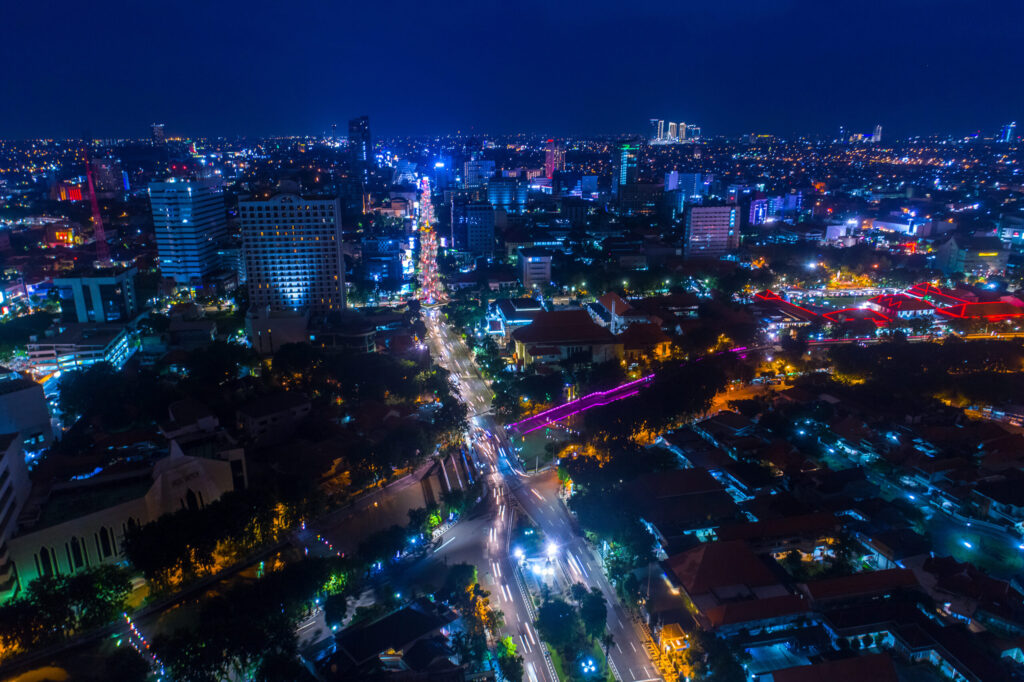
Restoring subsea electrical control in the TSB gas fields using V-LIFE technology, ensuring uninterrupted energy supply to East Java’s critical infrastructure.
Overview: Critical Subsea Gas Fields in East Java
The Terang, Batur, and Sirasun (TSB) gas fields are located about 100 km north of Bali, in water depths ranging from 90 to 230 meters. Collectively, they contain 1 trillion cubic feet of recoverable gas, primarily methane — equivalent to 170 million barrels of oil. Terang began production in 2012, producing 10 million barrels in the first eight months, with a daily output averaging 240 million cubic feet of gas (roughly 40,000 barrels of oil equivalent). The subsequent development of Sirasun and Batur (TSB Phase 2) added another 180 million cubic feet per day of gas starting in 2019.
Gas from the TSB fields is supplied primarily to PLN, the State Electricity Company, and PGN, which serves major industrial clients including fertilizer factories near Surabaya. East Java spans 48,000 km², with approximately 40 million residents, accounting for 20% of Indonesia’s population and economic activity. The majority of TSB gas fuels regional power stations, providing roughly 50% of the province’s electricity, making the continuity of supply critical for both homes and industries.
This case study is based on a paper presented at the Indonesian Petroleum Association Conference, which can be viewed here.

The Challenge – Subsea Electrical Failure Threatening Energy Supply
In February 2016, KEI faced a critical operational challenge when low Insulation Resistance (IR) in subsea umbilicals and Umbilical Termination Assemblies (UTAs) triggered a power trip at the Electrical Power Unit (EPU). This caused a loss of monitoring and control of the Terang wells.
While the subsea control system maintains valve positions during power loss, any hydraulic failure or emergency shutdown would immediately halt production, threatening East Java’s electricity supply and the operation of essential infrastructure. With replacement umbilicals requiring 18 months, the region faced an unacceptable risk of prolonged energy disruption. KEI needed a solution that could restore subsea system integrity quickly, safely, and reliably.
The Viper Solution – Rapid Insulation Resistance Recovery with V-LIFE
KEI worked with Viper to implement a technically guided recovery using V-LIM and V-LIFE technology. Interface engineering was completed within six weeks to integrate V-LIM into the EPU rack. Hardware was mobilized from the UK, and a Viper engineer was deployed offshore. During the first offshore shift, V-LIM was installed to provide real-time monitoring of insulation integrity, and V-LIFE was enabled during the second shift to repair the degraded insulation.
V-LIM continuously monitored all subsea electrical channels, while V-LIFE used electrokinetic and electrochemical reactions to restore insulation compromised by water ingress. Each affected channel was repaired sequentially under live monitoring, allowing KEI to maintain control throughout the process and recover the system without a full umbilical replacement. The combination of intelligent monitoring and targeted repair enabled a rapid and safe restoration of subsea electrical integrity.

Results & Benefits – Protecting East Java’s Energy and Infrastructure
Full control and monitoring of the subsea system were restored within two hours of V-LIFE activation. Insulation Resistance increased from 170 kΩ to 63 MΩ within four hours and reached 1 GΩ within 24 hours. All failed channels were recovered, ensuring uninterrupted gas supply to East Java’s power stations and industrial clients, while avoiding environmental and operational impacts associated with fallback coal and oil generation.
The operation demonstrated that rapid, informed action, guided by intelligent subsea systems, can protect critical infrastructure and maintain energy security under high-stakes conditions.

Intelligence installed in Action
With V-LIM and V-LIFE embedded, the subsea system now provides continuous monitoring, autonomous repair capability, and operational certainty, enabling quick, informed response while maintaining East Java’s vital energy supply. The intelligent subsea system ensures that critical infrastructure remains powered, resilient, and capable of rapid recovery — truly keeping the lights on for millions of residents and sustaining the industries that drive the region’s economy.