Railway Asset Management in Focus: Signalling Power Supplies
May 5, 2023
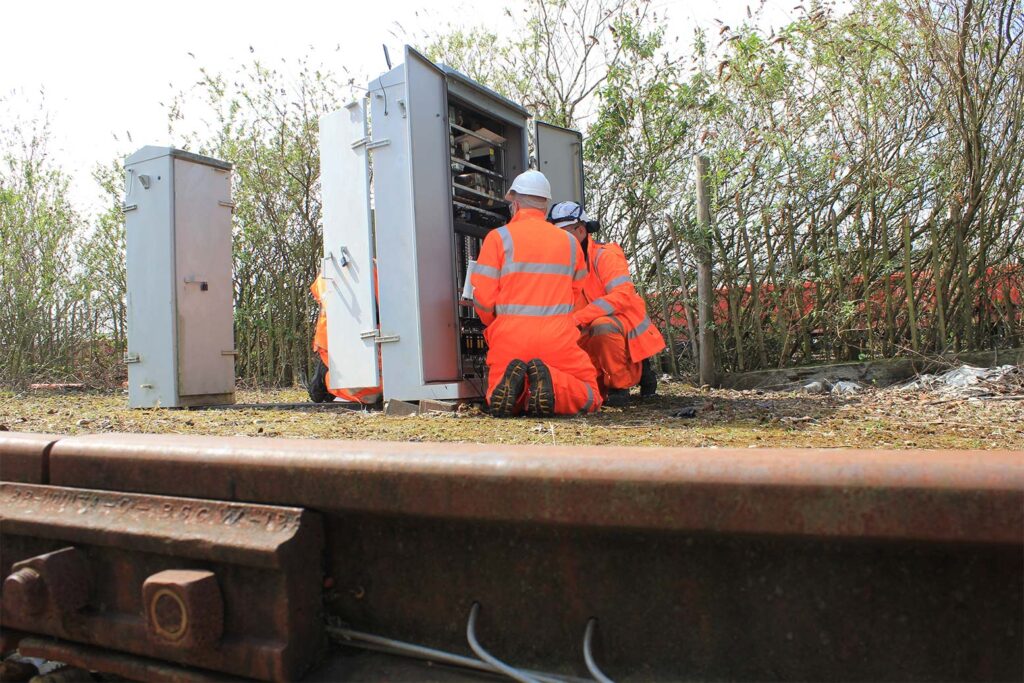
Developing and implementing an effective physical asset management system is fundamental to building a safe, efficient, reliable, and high-performing railway. Effective asset management enables organisations to maximise the value of their infrastructure investments while improving operational resilience, safety, and long-term performance.
The phrase “sweating the asset” has long been used across industry, but modern asset management goes far beyond extending operational life. Today, railway organisations need a clear understanding of asset condition, performance, lifespan, operating environment, and risk exposure. Just as importantly, they need effective closed-loop intervention strategies that connect asset information, operational decision making, maintenance actions, and organisational knowledge sharing across the entire enterprise.
The Railway’s Shift Toward Holistic Asset Management
The rail industry has made significant progress in transitioning from a reactive maintenance culture toward a more strategic and holistic approach to asset management. Supporting this evolution is the ISO 55000 suite of standards, which provides an internationally recognised framework for establishing effective asset management systems.
However, while standards and processes are essential, true progress depends on the quality and accessibility of asset intelligence sitting beneath them.
However, while standards and processes are essential, true progress depends on the quality and accessibility of asset intelligence sitting beneath them.
The Institute of Asset Management’s Anatomy of Asset Management outlines six core groupings that combine the Global Forum on Maintenance and Asset Management’s 39 asset management subjects. Together, these form a comprehensive model for delivering effective enterprise asset management.
For rail organisations, these principles provide a roadmap for creating value from infrastructure assets while maintaining reliable passenger and freight services. Yet despite advances in strategic asset management, significant gaps still exist in understanding the condition and behaviour of many assets at the lowest levels of the hierarchy.

The Missing Link: Asset Information and Decision Making
One of the greatest challenges facing railway asset management today is connecting asset information with effective decision making.
Many critical railway assets still operate with limited visibility into their real condition and degradation trends. This disconnect makes it difficult to build a truly holistic asset management strategy across the wider rail network.
The issue is particularly significant for less visible but highly critical systems such as signalling power supplies. While these assets rarely attract public attention, they underpin the safe and reliable operation of the railway. Failures can result in widespread disruption, costly interventions, safety risks, and significant operational impact.
Historically, assessing the condition of signalling power supplies has relied on periodic inspections, invasive maintenance activity, and fragmented data collection. Environmental conditions and latent failure modes often remain undetected until faults occur.

How Remote Condition Monitoring Is Transforming Rail Asset Management
Remote condition monitoring (RCM) is helping rail organisations close these knowledge gaps.
When combined with reliability-centred approaches such as Failure Modes and Effects Analysis (FMEA) and Digital Twin technologies, modern monitoring systems enable operators to build a far more accurate understanding of asset condition and risk.
The rail industry has already achieved strong levels of maturity in monitoring some highly visible assets through data analytics, trend analysis, and condition baselining. These approaches support proactive maintenance and improved service continuity.
However, truly understanding how to maximise asset life and performance requires deeper insight into the assets that sit at the foundation of railway operations.
CableGuardian: Advancing Condition Monitoring for Signalling Power Supplies
This is where a new generation of remote condition monitoring technology is changing the landscape.
Viper Innovations’ CableGuardian system is enabling rail operators to integrate signalling power supplies into the wider asset management hierarchy with unprecedented visibility and accuracy.
CableGuardian has been collaboratively developed with Network Rail to deliver far more than simple fault detection. The system provides continuous, remote, and highly accurate monitoring across a wide range of operating conditions, enabling operators to understand asset behaviour throughout its entire operational lifecycle.
By monitoring critical asset parameters continuously, CableGuardian allows potential failure modes to be identified long before service-affecting failures occur. This creates a far more complete picture of asset condition and enables predictive maintenance strategies based on real operational data.
The result is improved asset intelligence that directly supports both short-term operational decisions and long-term investment planning.

Enabling Predictive and Data-Driven Rail Asset Management
With accurate, real-time asset information, organisations can create stronger links between asset condition, maintenance planning, operational performance, and financial forecasting.
This enables rail operators to:
- Predict and prevent in-service failures
- Reduce operational disruption and maintenance costs
- Minimise safety risks associated with invasive inspections
- Improve resilience against vandalism and external damage
- Develop evidence-based asset replacement and life extension strategies
- Forecast capital and operational expenditure more accurately across future control periods
- Support enterprise-wide decision making with reliable asset intelligence
By transforming fragmented asset data into actionable operational insight, remote condition monitoring is becoming a critical enabler of modern railway asset management.
The Future of Railway Asset Management
As the rail industry continues its digital transformation journey, asset management strategies must evolve beyond reactive maintenance and isolated data collection.
The future lies in connected, intelligent, and predictive asset management systems that combine continuous monitoring, analytics, reliability engineering, and operational decision support.
CableGuardian from Viper Innovations is helping rail organisations move toward this future by providing the asset visibility needed to support safer, smarter, and more efficient railway operations.
Welcome to the next generation of railway asset management.