Faster, Leaner, More Standardised: Managing Risk in the Next Generation of Tiebacks
October 5, 2026
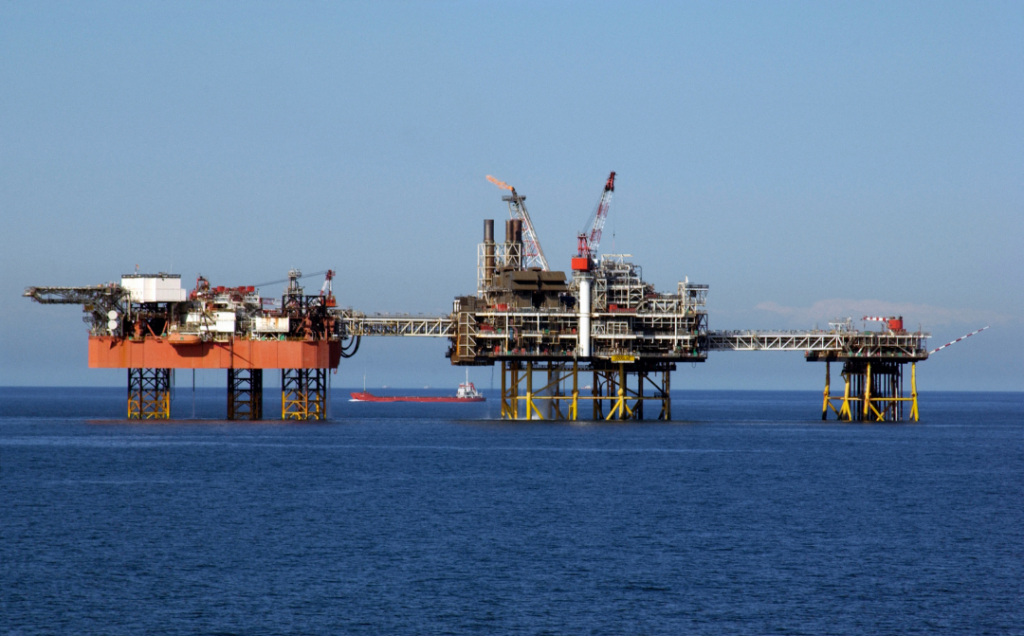
Standardisation and simplified architectures are helping operators move tiebacks from discovery to production more quickly. The next step is to make monitoring, diagnostics and electrical protection equally repeatable.
One of the main reasons operators pursue subsea tiebacks is speed.
Where a suitable host exists, the operator can avoid developing a completely new surface facility and focus investment on the wells, subsea equipment, pipelines, controls and modifications required to make the connection.
But achieving a fast first production date requires more than choosing a tieback concept.
It requires certainty across design, equipment availability, interfaces, installation and commissioning. Every unnecessary bespoke requirement has the potential to add engineering time, procurement risk and complexity.
That is why standardisation is becoming such an important part of the tieback conversation.
From bespoke engineering to repeatable delivery
Historically, many subsea projects have been engineered around highly specific field requirements.
That approach can deliver an optimised technical solution, but it can also create long design cycles, one-off interfaces and limited interchangeability.
The industry is now trying to find a better balance.
Standardised interfaces, modular equipment and pre-engineered systems can reduce the amount of project-specific engineering required. A DATAINTELO market study identifies modular tieback systems, pre-engineered manifolds and quick-connect solutions as opportunities to shorten engineering cycles and make smaller satellite fields more economically viable.
TechnipFMC describes its Subsea 2.0 approach as a move from engineer-to-order solutions towards pre-engineered, configure-to-order products. The objectives include shorter lead times, improved execution predictability and greater delivery reliability.
The operator benefits by spending less time repeatedly solving the same design problem.
Resources can instead be focused on the field-specific decisions that genuinely determine value and risk.

String Music and the standardised delivery model
The String Music award provides a current Gulf example.
Subsea7 is delivering the production flowline and associated infrastructure for Murphy Oil’s tieback to Delta House. The contractor has positioned the project within a wider effort to establish a more standardised and efficient delivery model for Murphy’s subsea developments. (World Oil)
This matters because predictability has direct commercial value.
A tieback that reaches production earlier can generate revenue sooner. It can also maintain host throughput and improve the economics of the receiving asset.
Standardisation can support that goal by simplifying interfaces, using known installation methods and reducing late design changes.
But standardisation should not stop with the hardware that carries production.
The operator also needs a repeatable approach to understanding and protecting the condition of the electrical and control infrastructure.

Leaner architecture changes the risk conversation
Project teams are also examining where physical redundancy can be reduced.
The Journal of Petroleum Technology’s (JPT) reporting from OTC 2026 highlighted growing interest in single-flowline oil tiebacks. Shell was described as using a single flowline as its base case, with a dual-flowline design treated as an exception where the risk case supports it.
The same discussion emphasised the role of better fluid sampling, modelling, digital tools and sensor data in helping operators understand and manage the additional risk.
A production flowline and an electrical control circuit are different systems with different failure modes. The single-flowline discussion should not be used to imply that the same design decision applies directly to subsea controls.
It does, however, demonstrate a broader industry principle.
When operators simplify physical architecture or reduce redundancy, the quality of information becomes more important.
Increasingly, confidence has to come from evidence: knowing the system’s condition, how it is behaving and what the consequences could be if it changes.
Technology must be ready before the project needs it
Speed also changes the point at which technology decisions must be made.
Tieback projects are often selected because they offer a faster route to production. Introducing an unproven technology late in the development can work against that objective.
Industry contributors to the JPT discussion stressed that new technology should have a clear commercial or technical purpose and be sufficiently proven before project execution. A fast tieback project is not the ideal environment in which to resolve fundamental technology uncertainty.
For integrity monitoring, this means requirements should be identified during concept selection and front-end engineering.
Waiting until commissioning, or until the first signs of deterioration appear, can limit the available options.
The right questions should be asked early:
- Which electrical sections need to be monitored independently?
- Where will isolation transformers create blind spots?
- What data will the operator need during the operating phase?
- How will measurements be transferred, stored and reviewed?
- Can protection be activated remotely if insulation resistance declines?
- Is the monitoring equipment compatible with future expansion?
These are not after-market additions. They are architecture decisions.

Standardising intelligence within the system
We believe condition visibility should be treated as part of the standard subsea package.
V-SLIM Eurocard, for example, is designed for integration into operator electronics modules and original equipment manufacturer designs. Its industry-standard form factor allows high-precision insulation-resistance monitoring to be embedded into new equipment or incorporated into existing module architectures.
For standalone subsea applications, the V-SLIM Canister provides a pressure-rated option that can be installed at strategic points within the network.
Both approaches are based on the same principle: put the measurement close enough to the area of risk to produce meaningful information.
This is especially valuable where an isolation transformer prevents a topside monitor from seeing the downstream network. A locally installed monitor can reveal the condition of electrical flying leads, infield umbilicals and distribution equipment that would otherwise remain hidden. For full technical specifications, download the V-SLIM Canister datasheet.
The point is not just to add another sensor.
It’s a more repeatable integrity strategy across different projects, hosts and equipment suppliers.
A practical assurance architecture
A standard tieback integrity approach could include four elements.
Defined monitoring boundaries
The project identifies which parts of the network need independent condition visibility and places monitoring accordingly.
Consistent data and trend analysis
Measurements are collected in a common format and reviewed over time, allowing teams to distinguish stable conditions from emerging deterioration.
Agreed action criteria
Engineering, operations and integrity teams understand who reviews the data, how anomalies are investigated and when further action is required.
Future protection capability
Monitoring equipment is selected with the ability to support additional diagnostics or electrical protection if degradation develops later in field life.
This creates consistency without removing engineering judgement.
Every subsea system remains different, but the operator no longer needs to invent the integrity-management process from the beginning for every development.

Faster delivery should not create a later blind spot
The drive for standardisation is helping operators bring tiebacks into production more quickly and economically.
That can make a real difference to marginal resources, host utilisation and portfolio flexibility.
The risk is that the project focuses so heavily on first production that life-of-field visibility is deferred.
A connection that is fast to install but difficult to monitor may transfer cost and uncertainty into the operating phase. A system designed with condition intelligence built in gives the operator a clearer picture from commissioning onwards.
The next generation of tiebacks will be faster, leaner and more standardised.
The most resilient will also be designed to explain their own condition.
By making monitoring and protection part of the repeatable architecture, operators can achieve the speed they need today without sacrificing the information they will need tomorrow.
To discuss how embedded integrity monitoring can support faster, leaner tieback projects, get in touch with our subsea specialists.