Heatwaves on the Railway: What Extreme Temperatures Are Revealing About Hidden Infrastructure Risk
June 23, 2026
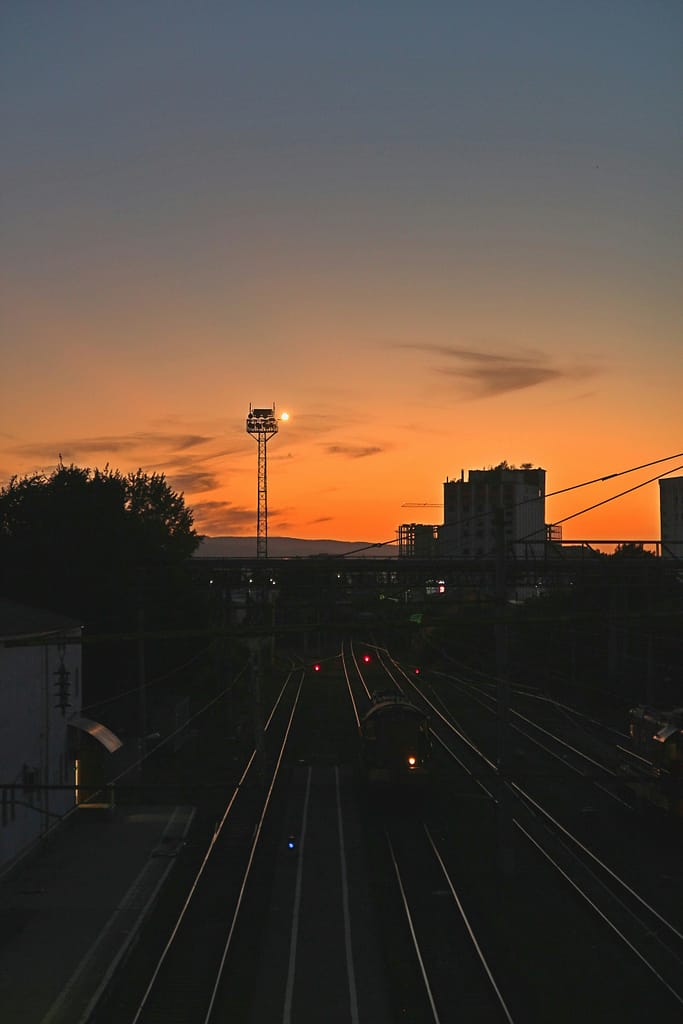
The UK rail network will once again operate under heatwave conditions this summer.
As temperatures rise, operational teams move quickly into well-rehearsed response mode — managing speed restrictions, monitoring track conditions, and protecting service continuity.
These measures are essential. They are also effective.
But heat does something else that is less visible.
It exposes the limits of what can be observed in real time.
Not just in track geometry or overhead line performance — but in the behaviour of electrical and supporting systems that sit beneath day-to-day visibility.
Heat is a known operational stress — but not just for track
The impact of high temperatures on rail infrastructure is well documented.
Steel rails can reach significantly higher temperatures than ambient air, and thermal expansion can lead to track instability and buckling risk. This is why speed restrictions and proactive monitoring are introduced during hot weather periods. (Network Rail)
Overhead line equipment is also affected, with thermal expansion and sag requiring careful tension management to maintain safe operation. (Network Rail)
These are established, visible risks — and the industry has developed strong operational frameworks to manage them.
However, these are only part of the picture.

The less visible challenge: systems that don’t fail in a linear way
Alongside these well-understood impacts, extreme weather also influences electrical system behaviour in more subtle ways.
Insulation systems and electrical distribution networks do not always fail in a predictable, binary fashion.
Instead, performance can vary depending on environmental conditions — particularly combinations of temperature, moisture, and load.
This can result in behaviour that is intermittent rather than permanent i.e. systems may appear stable during inspection, then behave differently under slightly changed conditions.
That variability is where complexity enters the maintenance picture.
Why intermittent faults matter more during heatwaves
Heatwaves act as a stress test for the entire railway system. But they also compress operational timeframes.
Inspection windows are tighter. Access is more constrained. Conditions change more rapidly.
And crucially, the environmental trigger behind a fault may not be present at the moment of investigation.
This is why intermittent electrical faults are so challenging – they are not always reproducible on demand.
In practice, this can lead to repeat investigations, extended diagnostic cycles, and uncertainty around root cause — not due to lack of capability, but due to the nature of the behaviour itself.

What the evidence tells us
Research into heat-related rail failures highlights that high temperatures can contribute to a range of infrastructure issues — from track deformation to overhead line performance and electrical equipment stress. (University of Birmingham)
Importantly, these effects are not always isolated events. They can be influenced by local conditions and vary across time and geography.
More broadly, industry analysis consistently shows that climate variability increases the frequency of operational disruption and places additional pressure on monitoring and maintenance systems. (World Economic Forum)
In other words: the challenge is not only failure — it is variability.
From point-in-time inspection to system behaviour
Traditionally, much of rail asset management relies on snapshot-based inspection and periodic testing.
This approach works well for stable or permanent faults.
But for issues that only appear under certain conditions, a different perspective is required.
Increasingly, the focus is shifting towards understanding how systems behave over time: how performance changes across environmental conditions, rather than what is observed in a single moment.
This allows engineers to move from isolated readings towards patterns of behaviour — and from reactive investigation towards earlier understanding of emerging issues.
Learning from operational reality
In practice, some of the most difficult faults are those that only appear under specific weather conditions — often during wet or variable periods following temperature extremes.
In these situations, a fault may not be present during inspection but becomes visible under a different environmental state.
Where longer-term visibility is available, these behaviours become easier to interpret — not just in terms of location, but in terms of how environmental conditions influence system stability.
That shift in understanding often leads to more focused investigation and improved confidence in decision-making.

The broader implication of a changing climate
As extreme weather becomes more frequent, the industry challenge is evolving.
It is no longer just about managing the immediate operational impact of heat on infrastructure.
It is about understanding how complex systems behave under stress — particularly when that behaviour is not consistent or repeatable.
This shifts the core question from “where is the fault?” to “how does the system behave when conditions change?”
That is a fundamentally different diagnostic challenge.
Conclusion
This summer’s heatwave is another reminder of how resilient the rail industry has become in managing visible infrastructure risk.
But it also highlights something less visible — that not all system behaviour can be captured in a single inspection moment.
The opportunity now is to improve understanding of how assets behave over time, under real environmental conditions, and under stress.
Not to replace engineering expertise — but to give it better continuity and context when conditions are at their most challenging.
If you’re seeing similar challenges on your network, speak to our experts to explore what better visibility could look like in practice.
.