More Functions Subsea, More Dependence on Power and Control
October 12, 2026
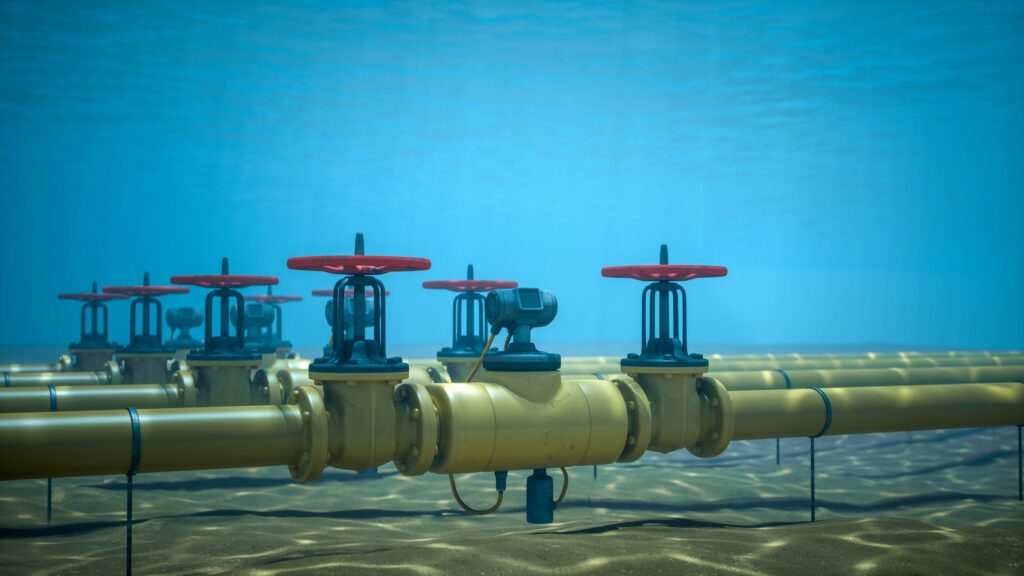
Separation, boosting, compression and water treatment are moving closer to the well. This can unlock longer and more efficient tiebacks, but it also increases the amount of production dependent on distributed subsea power, communications and control.
A conventional subsea tieback connects wells to a host where most of the processing takes place.
The next generation is becoming more capable.
Operators are evaluating whether separation, boosting, gas compression, water treatment, injection, produced-water handling and chemical-processing functions can be moved from the host to the seabed.
The objective is not to move equipment subsea for its own sake.
It is to solve specific development challenges: longer tieback distances, declining reservoir pressure, limited topsides capacity, high facility weight and the need to improve production efficiency.
The more functions that move subsea, however, the more the development depends on reliable power, control and communications below the surface.
A changing field architecture
An Offshore Magazine industry poll opened in August 2026 around a revealing question: which topsides functions have organisations already moved subsea, or are most likely to move next?
The options included separation, pressure boosting, gas compression, seawater treatment, injection, chemical processing and produced-water handling.
The poll is not evidence that every technology is already widely deployed. It is evidence that the industry is actively considering how much of the production system should remain on the host and how much can be transferred to the seabed. (Offshore Magazine)
This reflects a wider technological direction.
Subsea separators can remove gas or water before the wellstream reaches the host. Pumps and compressors can provide the energy required to transport production across greater distances. Electrically heated flowlines and chemical-injection systems can help manage hydrate and wax risks.
Digital twins, remote monitoring and predictive analytics can then help teams understand how the system is performing without relying entirely on periodic offshore intervention. (OE Digital)
Together, these capabilities can turn a tieback from a passive production connection into a distributed processing system.

Ringvei Vest points towards the future
Equinor’s proposed Ringvei Vest development provides a useful example of how this architecture could evolve.
The current concept combines seven discoveries and one prospect across eight licences and seven owners. The development is expected to include six subsea templates and thirteen wells connected to the Troll B platform.
The wellstream would be separated on the seabed before being transported to Troll B. The platform would also supply power to the subsea facilities and control the wells. A new compressor is planned on Troll B to increase processing capacity. (Equinor)
The project remains at an early stage. A final investment decision, development-plan submission and production start date have not yet been set.
Even so, the concept demonstrates the direction of travel.
The host remains essential, but part of the processing burden moves closer to the reservoirs. A distributed field of wells, templates and processing equipment becomes dependent on a common power and control architecture extending from Troll B to the seabed.
The development may unlock considerable resource value. Equinor estimates Ringvei Vest could contribute approximately 240 million barrels of oil equivalent. (Equinor)
Protecting that value requires confidence in every critical connection.
If you’re developing a field with increasing levels of subsea processing, it’s worth considering where production dependency is really being concentrated. As more functionality moves subsea, even relatively small electrical issues can have much wider operational consequences than they would in a conventional architecture.

Greater functionality creates greater dependency
The industry often focuses on the benefits of moving processing subsea, and understandably so. But the more interesting question is what happens to operational risk when production becomes increasingly dependent on distributed power and control systems. That shift deserves just as much attention as the processing technology itself.
A production system with more electrically powered subsea equipment may include:
- Additional power circuits
- More subsea connectors and distribution interfaces
- Longer electrical step-outs
- Isolation transformers
- Subsea electronics modules
- Increased communication requirements
- Greater dependence on remote diagnostics
- More production exposed to a common electrical fault
The consequence of losing one circuit may therefore be greater than it would be in a simpler architecture.
The affected function may not be limited to opening or closing a valve. It could include boosting, separation or another capability required to maintain production across the field.
This makes electrical-condition visibility part of the production strategy.
For operators, the question is no longer simply whether subsea systems are functioning today. The more useful question is how early a developing issue can be identified before it affects a production-critical function.
Topside visibility alone may not reveal the whole system
As the network expands, a single topside measurement may become less representative of the complete electrical architecture.
Isolation transformers can prevent a topside line-insulation monitor from seeing the downstream network. Multiple templates and subsea distribution units can make it difficult to identify which circuit is driving a deteriorating field-wide measurement.
Localised monitoring can close those gaps.
The challenge is not necessarily collecting more data. It’s understanding where visibility gaps may exist as subsea architectures become more distributed. As additional processing equipment, templates and electrical infrastructure are introduced, operators often need insight at a level that traditional topside monitoring was never designed to provide.
That is where localised monitoring can play an important role.
One approach is to introduce localised monitoring close to critical subsea circuits. V-SLIM is designed provide insulation-resistance measurements at these key points in the network.
The operator can then understand both the overall condition and the health of specific downstream networks.
This supports earlier diagnosis and more targeted action. It also reduces the chance that an emerging problem remains hidden until it affects a major subsea function.

Bringing the information together
Distributed measurement creates value only when the information can be interpreted and translated into operational decisions.
If you’re responsible for subsea integrity or production reliability, the challenge is rarely a lack of condition data. More often, it’s understanding which change matters, where it is occurring and whether action is required.
A large tieback may generate condition data from multiple topside and subsea monitoring points. Engineers need to see the relationships between those measurements, identify trends and understand which changes require attention.
PlatformVi is designed to bring electrical-integrity data into a connected analytics environment. Used with V-LIM and V-SLIM, it can support trend assessment, remote insight and data-led integrity decisions.
This allows intelligence to sit closer to the point of risk while remaining accessible to the people responsible for the field.
The operator still decides how the asset will be managed. The technology provides the visibility needed to make that decision with greater confidence.
Design monitoring before complexity is installed
The most efficient time to plan this architecture is during the design stage.
Once subsea processing equipment is installed and the field is operating, adding new monitoring points may require changes to qualified equipment, intervention or compromises in measurement coverage.
During front-end engineering, the project can:
1. Map the complete electrical architecture.
2. Identify circuits that will be hidden from topside monitoring.
3. Determine the consequence of losing each subsea function.
4. Place localised monitoring at meaningful network boundaries.
5. Define how data will reach the operator.
6. Establish response plans for changing condition.
7. Prepare appropriate circuits for future protection or recovery.
This creates a system that is not only controllable, but understandable.
Perhaps the most important question during field development is not what equipment will move subsea, but whether the operating team will have sufficient visibility once it does. The answer can have a significant influence on reliability, intervention requirements and long-term production performance.

The seabed is becoming more intelligent
The move towards subsea processing is ultimately about giving operators more options.
Fields that are too distant, too complex or too constrained for a conventional architecture may become developable. Existing hosts may accept production that would otherwise require significant topsides modification. Reservoirs may remain productive for longer through subsea boosting or compression.
The operator is the one turning that capability into commercial value.
The role of the integrity partner is to ensure that greater subsea functionality does not create greater uncertainty.
As more equipment moves beneath the surface, intelligence must move with it. Condition data should be installed into the architecture, available throughout field life and capable of guiding action before a developing electrical problem affects production.
More functions subsea will mean more dependence on power and control.
The operators that manage that dependency well will be better placed to unlock longer tiebacks, extend field life and maintain confidence in increasingly capable subsea systems.
If you’re considering how to maintain visibility across increasingly complex subsea power and control networks, speak to the Viper Innovations team about the practical strategies operators are using to improve electrical integrity visibility and support long-term asset reliability.