Root Cause In Under Three Hours: Live Insulation Resistance Testing in Power Systems
April 13, 2026
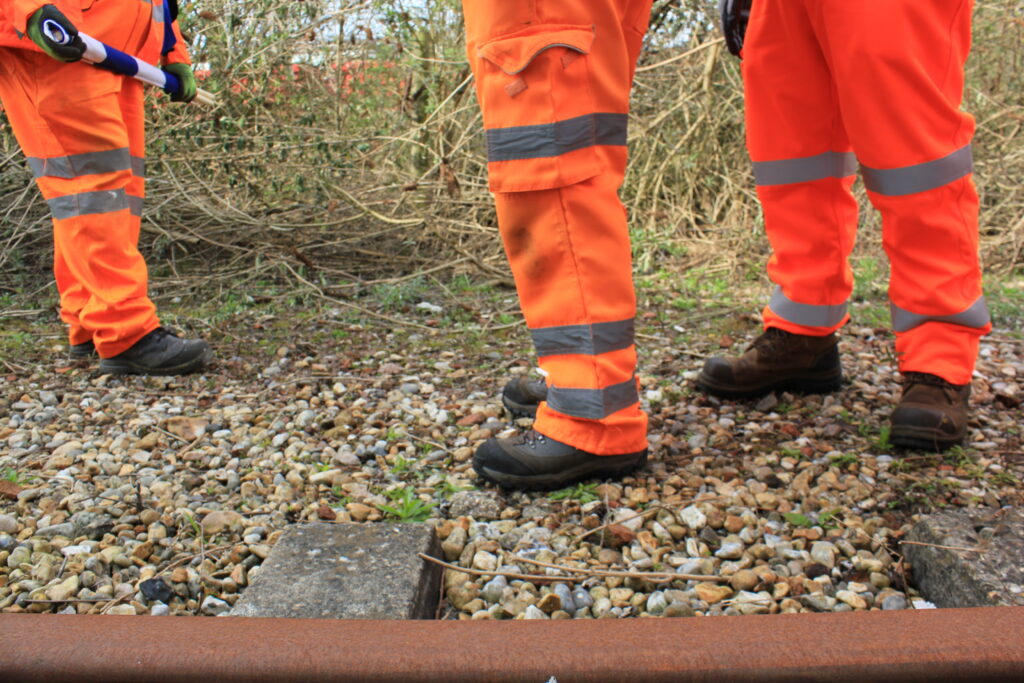
When a Network Rail Central Region signalling team identified a low Insulation Resistance (IR) reading in a two-feeder Signalling Power System (SPS), CableGuardian enabled rapid, live testing without requiring a possession. By providing immediate feeder-level insight and PSP analysis, the team identified the root cause in under three hours, achieving 100% feeder clearance and delivering an 18x improvement in insulation resistance following remediation.
The Challenge: Delays and Uncertainty in Identifying Low Insulation Resistance Faults
A signalling power team in the Central Region was investigating a signalling power system (SPS) reporting a Tier 3 network insulation resistance (IR) value of 117kΩ—well below the 250kΩ threshold.
Traditionally, identifying the root cause would require:
- A planned possession to isolate the 650V supply
- Disconnection of individual feeder cables
- Manual insulation resistance testing across each circuit
This approach introduced familiar challenges:
- Delays in securing access to the network
- Risk of late possession cancellations
- Operational disruption from powering down systems
- Extended investigation time, particularly where multiple feeders were involved
In this case, the system consisted of two feeders, and it was unclear whether the issue was feeder-related or originating within the Principal Supply Point (PSP).
The Viper Solution: Rapid Deployment and Live Insulation Resistance Testing with CableGuardian
To speed up the investigation, the team adopted a rapid deployment strategy using CableGuardian.
Rather than waiting for a possession, the team:
- Began testing immediately without waiting for network isolation
- Attended site and connected monitoring equipment directly to the live system
- Carried out insulation resistance testing on an energised 650V system
The objective was to quickly determine whether the low IR reading was caused by a feeder fault or an issue within the PSP itself.

How the solution was applied in practice
Live testing without disruption
The team was able to carry out the full investigation on an energised 650V system, avoiding the need for isolation or possession.
Immediate feeder health assessment
Both feeders were tested individually, with downstream insulation resistance readings recorded at greater than 6MΩ—confirming 100% of feeders were in a healthy condition and ruling them out as the source of the fault.
PSP-level insight through data interpretation
Using real-time, cloud-based data processing, the system provided an overall insulation resistance value for the PSP. By combining this with feeder-level measurements, the team could confidently determine that:
- The feeders were not contributing to the low network IR
- The issue was localised within the Principal Supply Point (PSP)
This level of diagnostic clarity would not have been achievable using traditional manual testing alone.
Results & Benefits: Faster Diagnosis and Targeted Remediation
- Root cause identified in under 3 hours (single operational window)
- 19x improvement in insulation resistance following remediation
- 100% of feeders ruled out at >6MΩ, enabling immediate isolation of the fault
- Zero possessions required for diagnostic investigation, avoiding access delays and operational disruption
- Full diagnostic clarity achieved in a single visit, enabling targeted remediation
Following the investigation, the team recommended a targeted inspection of the PSP by the relevant Distribution & Plant team.
This led to the discovery of redundant, decommissioned equipment still connected within the PSP, which was degrading insulation resistance.
Once removed, the Tier 3 network IR value improved significantly from 117kΩ to 2.3MΩ

Intelligence Installed in Action
CableGuardian enabled a shift from a possession-dependent insulation resistance investigation to a rapid, live testing approach. By delivering real-time visibility and feeder-level insight, the signalling team was able to quickly isolate the root cause, restore network performance, and minimise disruption to railway operations.