The Hidden Dependency Behind Subsea Tieback Economics: Electrical Integrity
September 28, 2026
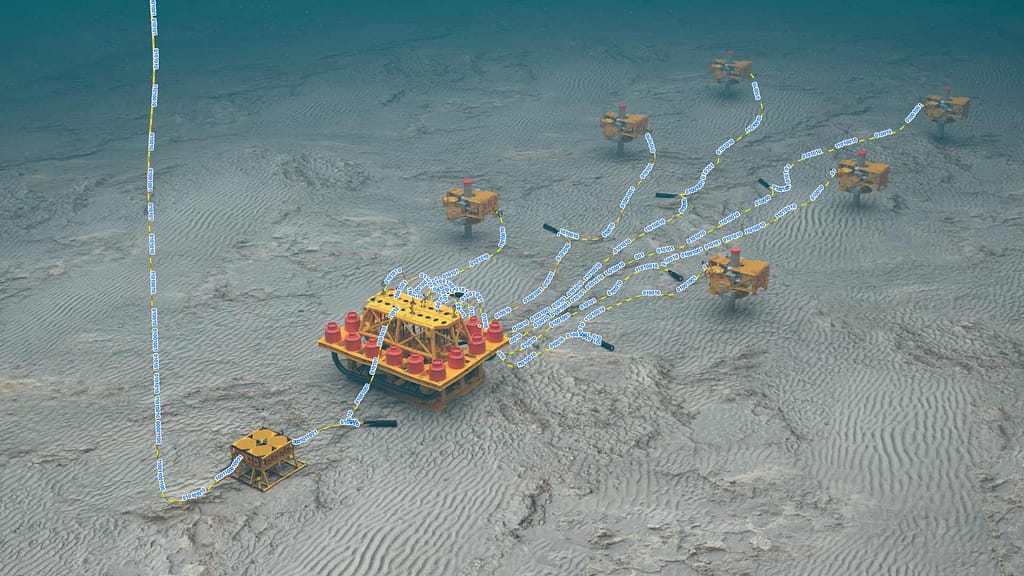
A tieback may be justified by reserves, distance, production rate and host capacity, but none of those advantages can be realised without reliable subsea power and communications. Electrical integrity must be treated as part of the commercial case, not simply as a maintenance concern.
Most subsea tieback announcements focus on the visible elements of the development.
They describe the number of wells, length of the flowline, water depth, expected production rate and receiving host.
Those figures are essential. They explain how much the project may produce and the physical infrastructure required to connect it.
Yet beneath the commercial headline sits another dependency: the subsea production control system must continue to deliver reliable power, control and communications throughout the life of the development.
Without that connection, the well may be mechanically complete, and the host may have available capacity, but production remains at risk.
The system behind the flowline
A subsea tieback depends on more than the route taken by the produced fluid.
Umbilicals, electrical flying leads, jumpers, distribution modules, subsea control modules and topside power and communication equipment allow operators to control valves, monitor conditions and manage production from the host.
As fields grow, those systems become increasingly distributed.
A single host may control multiple templates, wells and satellite developments. Some sections may be relatively new, while others have already spent many years exposed to pressure, seawater, thermal cycling and repeated operational demands.
As an operator, you end up managing a system made up of assets at different stages of life.
This is particularly important in brownfield tiebacks. The new equipment may be designed for a long service life, but its production can still depend on legacy infrastructure with a very different condition history.
Understanding insulation resistance
Insulation resistance is one of the key indicators used to assess the condition of an unearthed subsea electrical circuit.
In simple terms, it represents the ability of insulation to prevent unintended electrical current flowing between conductors or to earth. When water enters a cable, connector or electrical component, the insulation resistance can decline, and leakage current can increase.
For a more detailed explanation, read our guide, A Simple Guide to Insulation Resistance.
A low or deteriorating reading doesn’t automatically mean that failure is immediate. Electrical systems vary in architecture, capacitance, operating history and environmental exposure. Insulation resistance should therefore be understood as a condition trend within the context of the specific network, rather than interpreted solely against a universal number.
The direction and rate of change can be particularly valuable.
A stable circuit at a known operating level presents a different risk from one showing a rapid and unexplained decline. Continuous data enables you to distinguish between the two.
Without that trend, your team may only become aware of the problem when an alarm threshold is reached, communications become unstable or a circuit can no longer support operation.

Why one measurement point may not be enough
Traditional topside line-insulation monitors often provide a single measurement for the system visible from the host.
That may be sufficient for a simple circuit. It can become limiting as the field expands.
Isolation transformers and distributed subsea equipment can create monitoring boundaries. A topside unit may see the main umbilical and the primary side of a transformer but not provide condition information for the electrical distribution network attached to the secondary side.
The result can be a blind spot precisely where you need greater visibility.
V-SLIM was developed to address this type of challenge by providing localised measurements within the subsea network. Installed at strategic points, it measures both total-system and downstream insulation resistance, helping you identify where deterioration is occurring and make more informed maintenance decisions. Learn more about V-SLIM and its capabilities here.
The objective is not data for its own sake.
It’s there to give you enough information to make a better decision.
A field-wide low reading may otherwise trigger a broad and costly fault-finding campaign. A localised measurement can help your team narrow the area of concern, understand the risk to individual wells and select a more targeted response.

The cost of waiting for failure
Reactive fault finding is particularly challenging offshore.
A subsea electrical problem may require specialist engineering, vessel mobilisation, remotely operated vehicle support, disconnection of equipment and testing across several possible fault locations.
That can take time, affect production and introduce new risk into connections that were previously operating.
If the affected component is an umbilical or difficult-to-access distribution asset, replacement may require a substantial project rather than a routine maintenance task.
These consequences can undermine the original commercial logic of the tieback.
The development may have been selected because it reduced capital cost and accelerated production. A preventable electrical failure can then introduce the very cost, delay and offshore intervention that the tieback was intended to avoid.
Condition visibility protects the business case by giving you more time and more options.
A three-stage approach to electrical integrity
You can strengthen tieback readiness through a clear and practical plan.
1. Establish the baseline
The first step is to understand the existing system.
That includes its architecture, age, fault history, electrical boundaries, installed monitoring equipment and current insulation-resistance condition.
For brownfield tiebacks, the baseline should be established before the new field becomes dependent on the network. This gives you an opportunity to address monitoring gaps, repair known issues or prepare an appropriate contingency plan.
2. Place intelligence at meaningful points
The second step is to determine where measurement is needed.
A single topside reading may provide useful overall visibility, but a large distributed system may require additional monitoring downstream of transformers or close to critical circuits.
The aim is to divide the network into sections that make operational sense.
V-LIM provides continuous monitoring from the topside, while V-SLIM can extend localised visibility into the subsea distribution network. PlatformVi can then bring the resulting data together, enabling trend analysis and a clearer view of system health.
3. Define the action before it is needed
Monitoring is only valuable when you have a clear response plan. You should establish how trends will be reviewed, which changes warrant investigation, and what actions are available if deterioration is confirmed.
That response may include additional analysis, operational changes, planned maintenance or electrical protection.
Preparing in advance avoids the need to develop procedures under the pressure of an emerging production threat.
A Gulf operator turns risk into a controlled response
One of our case studies demonstrates the value of preparation and early action.
Ay Gulf operator identified insulation resistance as low as 460 kΩ within a subsea production control system. Continued deterioration threatened communications and production, while conventional fault finding or umbilical replacement would have been costly and disruptive.
Working with the operator and their original equipment manufacturer (OEM), Viper supported the installation of topside V-LIM hardware. V-LIFE was then activated through software, without requiring subsea intervention.
Within hours, insulation resistance increased from 460 kΩ to 43.8 MΩ. By the end of the week, it had exceeded 100 MΩ, more than 200 times the initial reading. The result remained stable six months later.
The technology was important, but the operator’s preparation was equally significant.
The operator had already done the critical groundwork: identifying the issue, involving the right people and preparing for a timely response. Viper then provided the technology and expertise needed to support the decision.
As a result, the risk was addressed before it could develop into a loss of production.

Monitoring, protection and recovery
V-LIFE is designed to support insulation-resistance recovery in systems affected by water ingress. It’s activated through installed V-LIM or V-SLIM monitoring hardware and can operate without shutdown or subsea intervention.
This gives you another option between continued deterioration and immediate hardware replacement. It may help stabilise electrical performance, extend operating life and create time for a planned long-term response.
Results will always depend on the system, fault mechanism and condition. The technology does not remove the need for engineering judgement.
What it changes is your range of available actions.
Rather than discovering a problem only after production is affected, you can monitor the trend, evaluate the risk and activate protection at an appropriate point.

Electrical integrity is part of project value
A subsea tieback is ultimately a commercial strategy supported by engineering.
The economic model assumes that production can be safely controlled, that the host remains available and that the common infrastructure continues to perform.
Electrical integrity is therefore not peripheral to the investment case. It is one of the conditions on which that case depends.
For you, the path forward is practical:
Know the baseline.
Install visibility where it is needed.
Trend the condition.
Prepare the response.
Act before the system loses operational capability.
This is Intelligence Installed in practice. You retain control because the system can reveal its condition, the data can guide the decision, and the right protection can be activated before a hidden weakness becomes a production event.
Speak to Viper about how continuous electrical integrity monitoring can help protect subsea tieback performance and reduce the risk of costly intervention.