Tiebacks at Scale: How Guyana Is Building Multi-Field FPSO Networks
November 9, 2026
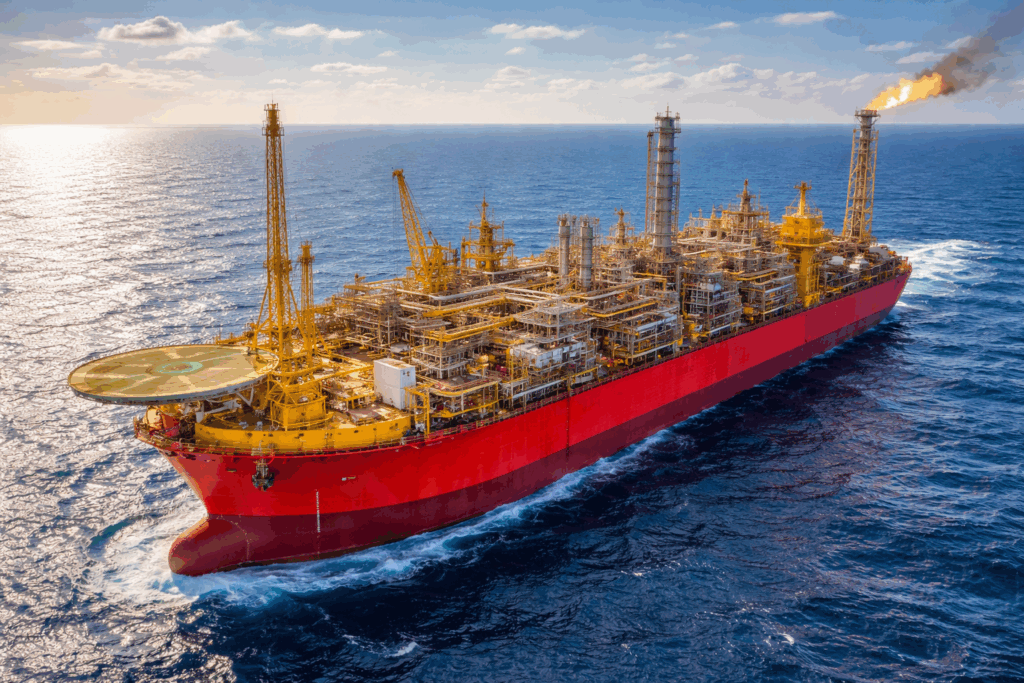
Guyana demonstrates that tiebacks aren’t only a solution for late-life facilities or marginal discoveries. In the Stabroek Block, they’re being designed into major greenfield developments, connecting multiple fields to shared FPSO hubs from the outset.
In mature offshore regions, tiebacks are often used to give existing infrastructure a new purpose.
Guyana presents a different model.
There, multi-field connections are being designed into some of the world’s largest new deepwater developments from the beginning. Anchor fields, satellite resources, subsea production systems and floating production vessels are being planned as integrated networks.
The approach shows how tiebacks can support scale as well as marginality.
For operators planning the next generation of deepwater developments, it also raises an important question: How do you make sure your integrity strategy scales with the production system?
Multiple fields, one production system
In the Stabroek Block, a subsea tieback allows wells from a satellite field to feed an FPSO associated with an anchor development.
OilNOW identifies this arrangement across several projects. Payara acts as the anchor field for the Payara development, with Pacora connected through the subsea system. Yellowtail is the anchor for the next development, with Redtail incorporated alongside it. Uaru takes the model further: Uaru is the anchor field, while Mako and Snoek will be connected through subsea tiebacks to the same production facility. (OilNOW)
The projects aren’t small.
They involve extensive well programmes, large subsea systems and FPSOs designed to process hundreds of thousands of barrels per day.
Tiebacks therefore aren’t being used only to recover residual value from existing facilities. They’re part of the original field architecture.
That changes the integrity challenge.
When you’re developing a network rather than a standalone field, you need to think beyond the condition of individual assets. You also need to understand the health of the common systems connecting them — and how that condition could affect production as the network expands.

Uaru demonstrates the scale
The Uaru development was sanctioned with a capital cost of approximately $12.7 billion.
It’s designed to produce around 250,000 barrels per day and develop more than 800 million barrels of estimated resources. The project includes up to 10 drill centres and 44 production and injection wells. (ExxonMobil)
TechnipFMC’s subsea scope includes 44 subsea trees, 12 manifolds and associated controls and tie-in equipment. It’s also the first Stabroek project to use the company’s Subsea 2.0 system, which applies pre-engineered, configure-to-order equipment to support an accelerated project schedule.
As of August 2026, subsea installation work was continuing and the Errea Wittu FPSO was travelling to Guyana, with startup targeted before the end of the year. (OilNOW)
The scale matters.
One FPSO and its associated subsea network will support production from three named fields. A common system therefore carries the value of a substantial multi-field development.
The question for operators is how to make sure the integrity strategy is designed at the same scale.

Standardisation enables repeatability
The Stabroek Block has progressed through successive developments at a rapid pace.
Repeatable equipment, established project teams, and a growing local supply chain help each new phase benefit from experience gained on the previous one.
Standardisation can reduce engineering repetition, support manufacturing efficiency and improve schedule predictability.
TechnipFMC’s configure-to-order approach uses pre-engineered equipment and predefined supply-chain and quality arrangements rather than starting with a completely bespoke design for every project. Its Subsea 2.0 platform is being used across successive Guyana developments.
For the operator, this provides a platform for controlled scale.
But there’s an opportunity to take the principle further.
If you’re standardising the production architecture, why not standardise condition intelligence alongside it?
Monitoring interfaces, data structures, response procedures and protection capability can be designed as repeatable elements of the subsea architecture.
The advantage isn’t limited to faster commissioning.
A consistent monitoring approach can help your future operating teams compare condition across different fields, drill centres and developments.
Over time, that creates a more useful body of evidence for understanding change, identifying developing risk and prioritising intervention.
For an operator managing an expanding network, consistency matters.
The FPSO network creates future optionality
The value of Guyana’s FPSO fleet may extend beyond the fields included in the initial development plans.
ExxonMobil has stated that the growing network could support lower-cost tiebacks from smaller accumulations located close to installed facilities. With multiple FPSOs in the southeast of the Stabroek Block, discoveries that wouldn’t justify a new production vessel may still have a route into production.
This is the same hub principle seen in the Gulf and North Sea but applied at a much larger and earlier stage of basin development.
The FPSO is built for an anchor development.
Satellite resources are incorporated into the original project.
The resulting infrastructure then creates options for further discoveries during the following decade.
Each project adds production. The network adds strategic flexibility.
But that flexibility also creates a longer-term integrity consideration.
The system you’re designing today may not be supporting the same production configuration ten or twenty years from now.
Your monitoring strategy therefore needs to be capable of evolving with the network.

Shared systems concentrate production dependency
Multi-field integration also increases the consequence of common infrastructure problems.
The wells may be distributed across several reservoirs, but they depend on shared systems for:
• Electrical power
• Hydraulic control
• Communications
• Chemical delivery
• Flow routing
• Processing
• Storage
• Export
An issue within one well-specific circuit may remain local.
A problem affecting a common umbilical, distribution system, host interface or shared processing function can influence a much larger proportion of production.
The more production that depends on a common system, the more important it becomes to understand that system’s condition.
As an operator, you need enough information to distinguish a local issue from a developing network-wide risk — and enough warning to act before the problem affects multiple production sources.
That’s where condition intelligence becomes a strategic tool rather than simply a monitoring function.

Greenfield projects have an important advantage
Mature offshore assets often need monitoring equipment to be retrofitted after years of operation.
Guyana’s new developments have the opportunity to take a different approach.
Condition intelligence can be designed in before the equipment is manufactured and installed.
During front-end engineering, you can identify electrical monitoring boundaries, consider where measurement needs to sit within the architecture, embed measurement within subsea modules where appropriate, and make sure the right data is available from first commissioning.
The objective isn’t to monitor everything.
It’s to make sure the right information is available at the right points in the system to support future decisions.
Monitoring can be embedded within OEM subsea electronics, deployed as independent subsea monitoring nodes where required, and combined with topside analytics platforms to provide visibility across the wider electrical network. This creates a layered approach to condition intelligence from host facility to subsea assets.
Examples of technologies that support this approach include V-SLIM Eurocard, V-SLIM Canister, V-LIM and PlatformVi.
But the important consideration isn’t the technology itself.
It’s the architecture around it.
Where will you need visibility?
What will you need to know?
And how will that information help your operating team decide what to do next?
Designing those questions into the project early gives you a significant advantage.
You can establish visibility before degradation becomes established — rather than waiting for an ageing system to reveal its weaknesses through a production problem.
That’s particularly important for a system expected to support expansion over many years.
Designing for the full field life
Your monitoring strategy needs to consider more than the opening production phase.
If your development is likely to evolve over decades, you need to consider how the network may change with it.
Ask yourself:
1. Which future fields could connect to your system?
2. Will later expansion create new transformer or distribution boundaries?
3. Can you incorporate additional monitoring points without redesigning qualified equipment?
4. How will you combine data from different development phases?
5. Can you locate electrical degradation to a meaningful section of the system?
6. What protection options will remain available later in field life?
7. How will monitoring continue during FPSO shutdowns, disconnection or major maintenance?
These aren’t simply technical questions.
They determine how effectively you’ll be able to understand and manage your system as it becomes more complex.
The answers help ensure that your architecture remains understandable as it grows.

From monitoring to decision intelligence
The opportunity is bigger than simply installing more sensors or monitoring equipment.
It’s about building an evidence base that can support decisions throughout field life.
When condition intelligence is available from the outset, your operating teams can establish a baseline, identify changes over time, understand where degradation is developing and plan action around evidence.
That can help you:
• Prioritise investigation
• Plan intervention around operational requirements
• Distinguish emerging risks from isolated events
• Protect common infrastructure
• Support future tieback decisions
• Build knowledge across successive developments
For a growing subsea network, that visibility becomes increasingly valuable.
Your integrity strategy needs to scale with your production strategy.

A model for intelligent development at scale
Guyana is showing that subsea tiebacks can play a central role in major greenfield developments.
Payara, Yellowtail and Uaru use multi-field architectures to make fuller use of each FPSO and subsea production system. The expanding fleet may then create a route for smaller discoveries that emerge later.
The operator is building both production capacity and future optionality.
But as the network grows, so does the importance of understanding the condition of the systems that connect it.
The role of an integrity partner isn’t simply to provide monitoring technology.
It’s to help you build the visibility and evidence you need to understand changing risk, make informed decisions and act before a local issue becomes a network-wide problem.
When condition intelligence is installed from the outset, you don’t have to wait for an ageing system to reveal its weaknesses through a production problem.
You can monitor change across field life, understand where risk is developing and plan action around evidence.
The goal isn’t simply to build a bigger subsea network. It’s to build one that remains visible, understandable and manageable as it grows.
That’s what can make tiebacks at scale reliable at scale.
Building for scale? Let’s talk.
Find out how Viper can help you build greater visibility into subsea electrical integrity from the outset.