Why Subsea Tiebacks Are Becoming Central to the Gulf’s Next Production Cycle
August 17, 2026
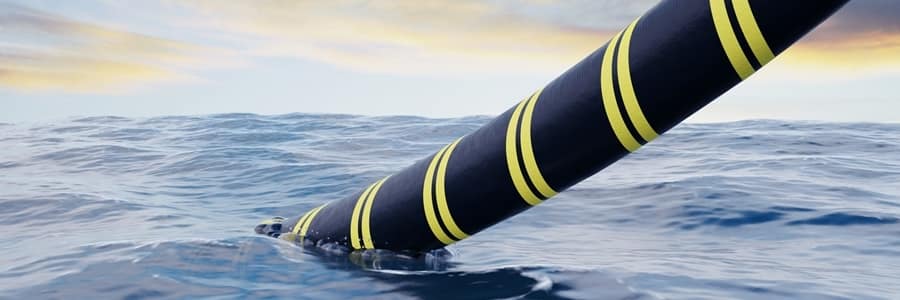
Subsea tiebacks are moving from marginal-field solution to mainstream production strategy. In the Gulf of America, their ability to accelerate first oil and maximise existing infrastructure is creating significant opportunity, but the value of every new connection depends on the reliability of the system behind it.
Deepwater operators are being asked to achieve several objectives at once: bring new reserves into production faster, control capital exposure, maintain safe operations and extract more value from infrastructure already in place.
Subsea tiebacks fit that brief.
Once associated primarily with small discoveries located close to an existing platform, tiebacks are becoming an increasingly important part of global offshore portfolios. Rystad Energy expects them to provide about 19% of total crude production and 49% of offshore crude production by 2035. The majority of subsea trees forecast to be ordered between 2027 and 2030 are also expected to support tieback projects. (JPT)
A DATAINTELO market study provides another indicator of the direction of travel. It estimates that the global subsea tieback hardware market will grow from $6.8 billion in 2025 to $10.9 billion by 2034, representing a compound annual growth rate of 6.2%.
The message is clear: tiebacks are fast becoming part of how operators plan production growth.
A strategic production model
The attraction of a tieback is straightforward. Rather than constructing a standalone platform or floating production facility for every discovery, an operator can connect new subsea wells to an established host.
That can reduce the amount of new infrastructure required, shorten the route to first production and spread the fixed costs of the host across more barrels. At the 2026 Offshore Technology Conference one of their panels was on Subsea Tiebacks, Increased Production, Lower Costs & Risks, Greater Optionality and in the discussion, they highlighted the ability of tiebacks to extend host-facility life, improve host economics and commercialise resources that might otherwise remain uneconomic.
For operators, this creates valuable optionality.
A new discovery does not always need to justify an entirely new production facility. A host can support a series of developments over time, allowing the operator to phase investment, respond to new subsurface information and maintain throughput as production from the original field declines.
The host therefore becomes more than a processing facility. It becomes a platform for future growth.

Current projects reinforce the momentum
The next phase is already moving forward.
In August 2026, the Who Dat joint venture sanctioned Who Dat East as a one-well development connected to the existing Who Dat floating production system through a 29 km pipeline. The project includes subsea controls and minor host upgrades, with first production planned for the second half of 2028. (karoonenergy.com.au)
Murphy Oil has also awarded Subsea7 a contract for String Music, a deepwater tieback to the Delta House facility. The project includes a production flowline and associated subsea infrastructure in water depths of approximately 1,850 metres, with offshore installation scheduled for 2027. (World Oil)
Each project has its own technical and commercial case, but together they demonstrate a wider shift. Gulf operators are repeatedly using established infrastructure to bring additional resources into production.

The commercial case has an operational dependency
A tieback may avoid the need for a new host, but it does not avoid infrastructure dependency.
In fact, it can increase it.
As more wells and fields connect to a common facility, a greater proportion of production depends on shared processing, control, power and communication systems. The host must not only have available production capacity. It must remain reliable enough to support the new development throughout its intended life.
This changes the questions that should be asked during concept selection and front-end engineering.
The decision is not simply whether a new well can be physically connected. Operators also need to understand:
- What is the current electrical condition of the host and subsea control network?
- How much of the existing architecture can be monitored accurately?
- Are there ageing umbilicals, jumpers or distribution components that could constrain the expanded system?
- Can developing degradation be identified before it affects the new production stream?
- What is the consequence if a common power or communication circuit becomes unavailable?
- Has the system been prepared for future expansion, monitoring and protection?
These questions are especially important in brownfield developments. The host may have years or decades of successful operation behind it, but the new tieback is being justified partly on the assumption that the same infrastructure will continue to perform reliably into the future.
Moving from installed capacity to installed intelligence
Availability cannot be guaranteed by nameplate capacity alone.
Operators need evidence of asset condition. They need to know how their critical systems are performing now, how that condition is changing and where intervention should be prioritised.
Within a subsea production control system, that means gaining meaningful visibility across umbilicals, jumpers and electrical distribution equipment. As fields age and step-outs increase, hidden electrical degradation can introduce risk to power, communications and control. Continuous monitoring, trend analysis and localised subsea measurement can help operators replace uncertainty with actionable information.
This is where an integrity technology partner like us can act as a guide.
You, the operator remains the decision-maker. The role of the technology is to reveal what cannot otherwise be seen, provide the evidence needed to assess risk and support action before a developing issue becomes a production event.

Protecting the value of the next connection
Tiebacks are becoming central to the Gulf’s next production cycle because they allow operators to move faster and make better use of valuable infrastructure.
Their strategic importance will continue to grow as new hubs are built and existing facilities become connection points for further discoveries.
But every additional field also raises the value placed on the common infrastructure serving it.
The operators that capture the greatest value from tiebacks will therefore be those that look beyond the initial connection. They will assess the condition of the complete system, design monitoring into the architecture and ensure that their teams have the intelligence required to protect production throughout the life of the development.
The future of subsea growth is connected. Its success will depend on how confidently those connections can be managed.
Speak to our team about how subsea integrity intelligence can help protect the value of your next tieback.